
La Paz County Criminal Docket Searches
The free Arizona Public Access Case Lookup is the best first stop for a La Paz County criminal docket search. It covers La Paz County Superior plus several limited courts. Those include Parker Justice, Parker Municipal, Quartzsite Justice, Quartzsite Municipal, and Salome Justice. Updates arrive Friday with information through Wednesday. The index is useful, but it is not live. A brand-new charge can hit the court file before the index catches up. So can a reset or a disposition.
Bring the full criminal case number if you have it. A name search works, but shared names pile up extra results. Keep the court named on your notice or citation in view, then follow this path:
- Complete the CAPTCHA and choose case-number or name search.
- Select the court that began or now holds the criminal case.
- Open the matching result and verify the court, number, type, and status.
- Read events in date order, then compare the newest setting with the local calendar.
- Ask the proper clerk for an omitted document or certified disposition.
The official Minute Entry Search offers another way to reach participating minute entries. That official page displays the interface you will use.
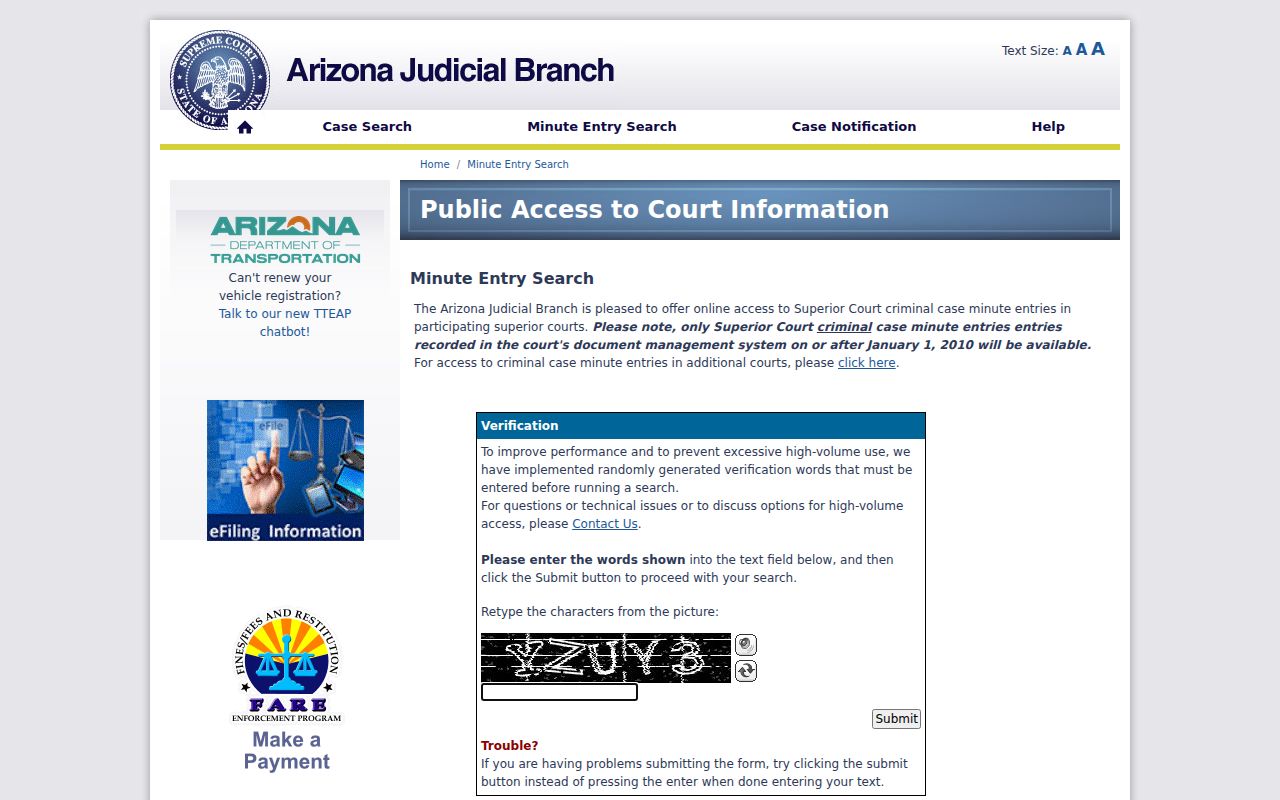
A minute entry records what the court did. It does not always replace a signed order or a clerk-certified result.
La Paz County Felony Docket Path
A felony in La Paz County can leave paper in more than one court. The case often starts in a limited court with an initial appearance and a complaint. Then comes an information or indictment from the prosecution. The case moves forward in the Superior Court of Arizona in La Paz County. A new Superior Court criminal number can result. No single register holds every stage. To trace the whole case, search the lower-court name and La Paz County Superior separately.
| Stage | Likely record holder | Useful check |
|---|---|---|
| Initial appearance | Justice or municipal clerk | Original complaint and release setting |
| Felony prosecution | Clerk of the Superior Court | Charges, plea, motions, trial, and sentence |
| Limited-court appeal | Superior Court clerk | Separate appellate case and lower-court cross-reference |
| Superior Court appeal | Arizona Court of Appeals, Division One | Notice and appellate docket entries |
The two files are related. They are not one record. A cross-reference or appeal entry can link them.
Criminal Dockets: What They Show
A La Paz County criminal docket tells you which case it is. What happened in it comes later in the record. Read each charge separately, since the plea and result can differ by count. Treat a docket label as an index clue only. For legal proof, you need more. Get the signed minute entry, judgment, sentence, or certified disposition from the court that holds it.
| Case Number | The local Superior Court criminal pattern may appear as S1500CRYYYYNNNNNN. |
|---|---|
| Charge | Offense description, statute, classification, count, and public disposition data. |
| Parties and Counsel | The State as prosecutor, defendant role, and counsel when public. |
| Release Record | Public bond type, amount, conditions, status, and related events. |
| Events and Settings | Minute entries, motions, hearings, courtroom data, and results supplied by the court. |
| Outcome | Plea, disposition, sentence, financial obligations, and appeal entries. |
Leave blank data blank. An empty field does not prove the charge lacks a result or that no later hearing exists.
La Paz County Criminal eAccess
Arizona eAccess registration and fee information covers the paid document layer. It applies to unrestricted Superior Court civil and criminal cases filed on or after July 1, 2010. That official page lays out the service.
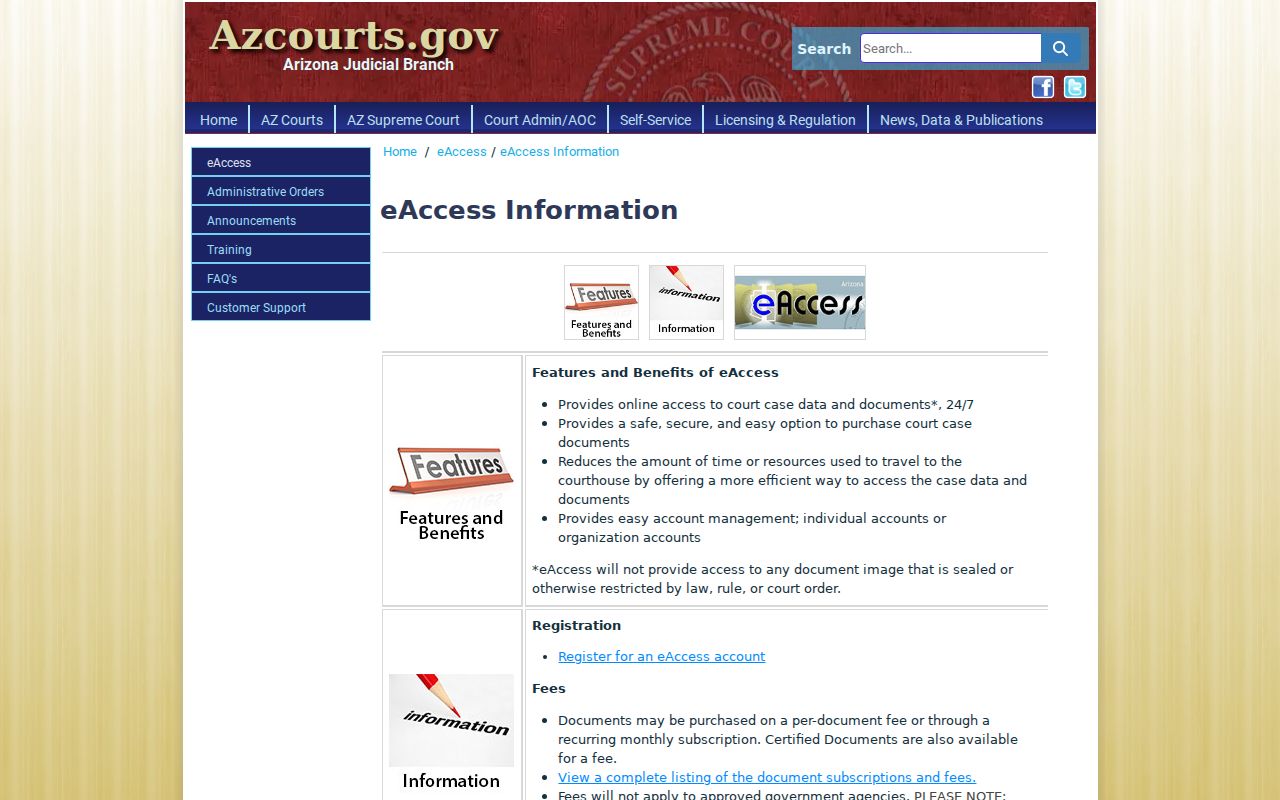
The service runs around the clock. The filters are precise. You can narrow results by La Paz County Superior Court, filing date, criminal case type, case number, party, title, event wording, or judicial officer. Broad searches may fail or flood you with results. Lean on the court and event filters.
The official eAccess questions and answers explain coverage, downloads, purchases, and certification on that court page.
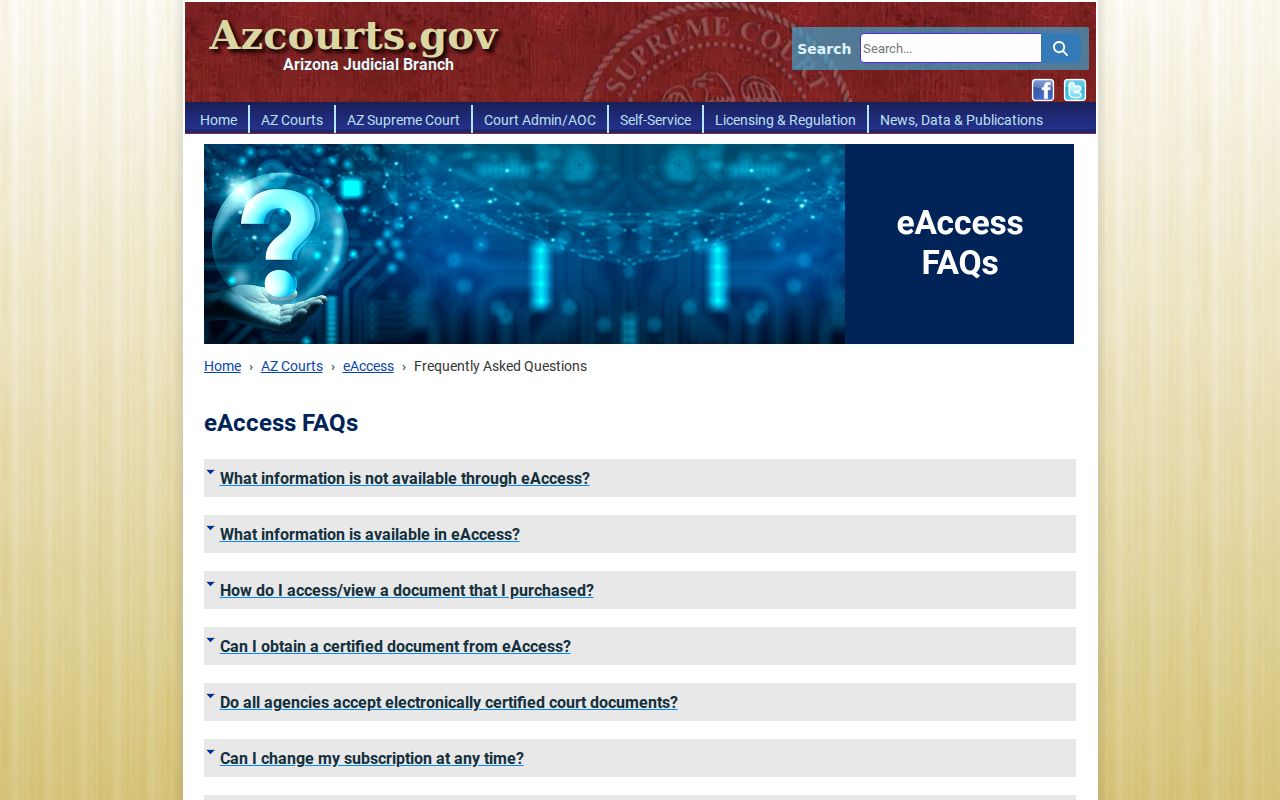
A first-page preview carries an unofficial watermark. Once you purchase a file, view or download it within 24 hours. If the image is missing, the local clerk is the fallback.
eFileAZ plays a different role. It transmits filings to courts. Even so, an eFileAZ account does not turn every filing into a public docket image. For criminal records, Public Access, eAccess, and the clerk remain the channels.
Document cost: eAccess lists a $10 per-document option and subscription tiers. Electronic certification is $39, which differs from the local clerk's $35 certificate of correctness.
Criminal Case Stages on the Docket
The La Paz County criminal docket makes more sense read as a process. An initial appearance covers rights and release, while arraignment records the plea. Pretrial and status settings track readiness, counsel, disclosure, and open issues. A motion hearing decides one specific request. A change-of-plea hearing records a later plea. Trial resolves the contested facts.
Docket flow: Filing › Arraignment › Pretrial › Plea or Trial › Disposition › Sentencing
Do not stop at a plea line. Judgment and sentencing entries show the completed result. Post-judgment motions or appeals can still add activity after the sentence is entered. A bond forfeiture concerns the bond, not a conviction. A vacated hearing has left the calendar. That does not mean the criminal charge was dismissed.
The La Paz County clerk's weekly calendars post PDF and Excel settings by judicial officer. Compare that current calendar with the dated event history before relying on an older download.
The current presiding-judge directory names Jerry Landau as temporary presiding judge. Trust current calendars and 2026 administrative orders over an older page. That older page still lists the late Judge Marcus A. Kelley.
Note: Read the latest dated entry for each charge. Draw no conclusion about the La Paz County criminal case before it.
La Paz County Criminal Docket Terms
Arizona entries can look conclusive when they are merely steps. These distinctions keep a La Paz County criminal docket from being read out of order:
- Disposition
- The recorded outcome of a charge or the case.
- Set aside
- Relief granted under Arizona law that does not erase the historic court file.
- Expunged
- A distinct remedy used for qualifying marijuana matters when a court grants it.
- Sealed
- A record withheld under law, rule, or court order after the required process.
- FTA
- Failure to appear. Because portal data can lag, current status should be checked with the court.
The Arizona eAccess record splits into case information, participant details, criminal charge information, event information, and hearing information. A blank charge disposition means nothing is entered in that field. The reader should not supply one.
La Paz County Criminal Docket Courts
Felony files for La Paz County live with the Superior Court of Arizona, and the Clerk of the Superior Court in La Paz County keeps and certifies those records. Misdemeanor, DUI, and criminal traffic cases stay with the La Paz County Justice Court. It also handles early felony steps. City ordinance, misdemeanor, and traffic matters go to Parker Municipal Court or Quartzsite Municipal Court. Each sits within its own jurisdiction.
Court labels here can trip people up. State lists still show Parker, Quartzsite, and Salome justice courts. The current organization report counts just one justice precinct. If a portal result asks for an old court name, type it in. Then call the office now responsible to sort out any unclear routing. The official Arizona court organization overview lays out the statewide hierarchy for anyone who wants the full picture.
For Superior Court records, reach the clerk at 1316 Kofa Avenue, Suite 607, Parker, AZ 85344. Or call (928) 669-6131 on weekdays from 8:00 a.m. to 5:00 p.m. The Justice Court sits at 1105 W. Arizona Avenue in Parker. Call (928) 669-2504 during the same weekday hours. Unsure which office owns the docket? The La Paz County courts directory offers a direct local route to both offices.
Missing La Paz County Criminal Dockets
A blank search result proves very little. The court may not take part in the tool you used. The Friday update may lag behind a fresh filing. A historic venue label may differ from the modern one. Or the file could be sealed or restricted. Free Public Access can even show an event while holding back the filed image.
Work a fallback chain instead of guessing. Check the case number spelling, the year, and the court. Try the separate Minute Entry Search next. Then scan the latest weekly calendar for a known Superior Court setting. After that, contact the clerk who owns the record. Ask whether the file is public, archived, left off the online docket, or subject to a formal Rule 123 request. One caution: never ask a clerk to produce another court's file.
For a public Superior Court file, the fallback may be a counter visit or a mailed request. Call the clerk first. Confirm the document, the copy type, the total fee, how you can pay, and how delivery works. The local site makes no promise of same-day service.
History adds one more wrinkle. The local record trail predates La Paz County's creation in 1983. An older prosecution from this area may sit in the archives of Yuma County. The La Paz clerk can help confirm that routing.
Access Rules for Criminal Dockets
Public access to La Paz County judicial records runs through Arizona Supreme Court Rule 123. That rule presumes records are open. It also defines confidential categories, redaction, fees, review, and limits. A.R.S. §13-911 adds a petition process for sealing qualifying criminal case records. Several items can be closed or restricted. Examples include juvenile files, protected victim data, presentence work, and medical or treatment reports.
The Arizona Legislature publishes A.R.S. §13-911, where the full statute text sets out the sealing process and its terms.
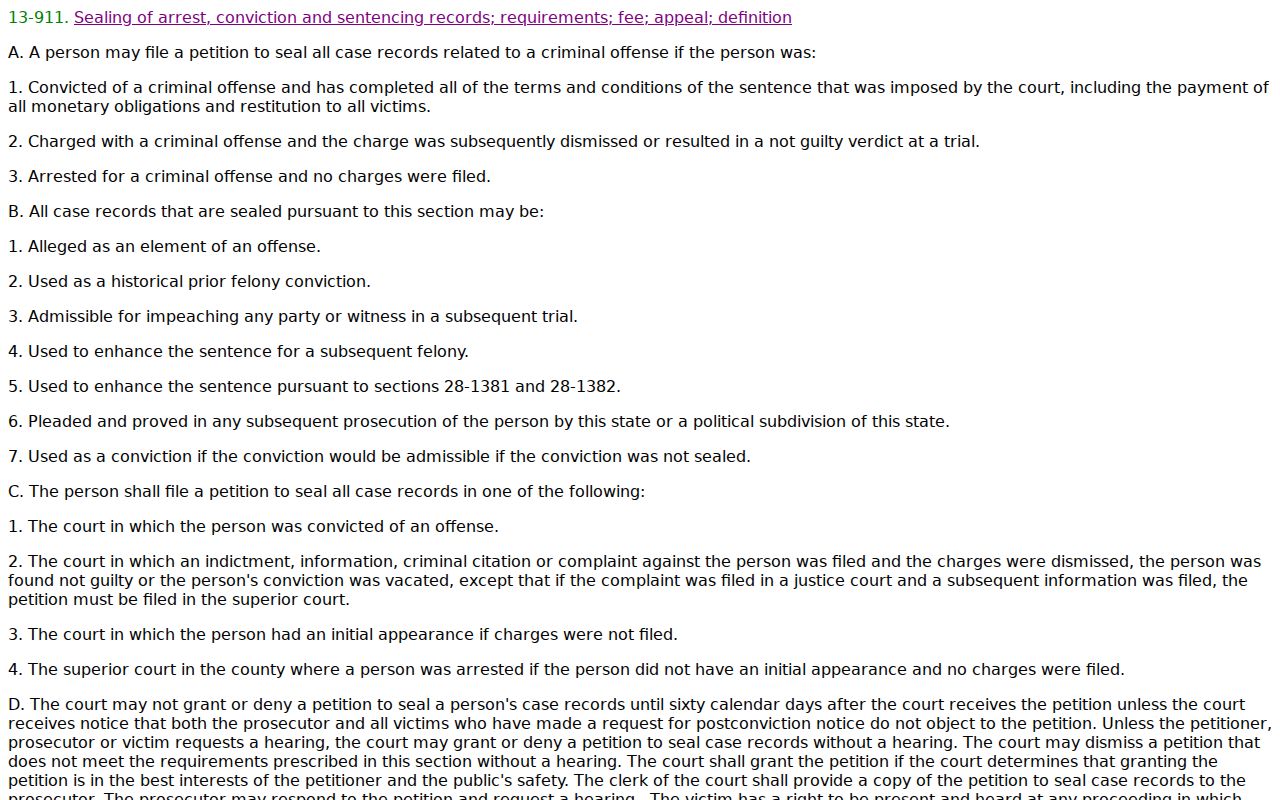
The statute covers process and eligibility, not outcomes for any one case. A missing portal result alone never proves the court sealed anything.
Key access rules:
Arizona Supreme Court Rule 123 sets the judicial-record access framework.
A.R.S. §8-208 addresses access and confidentiality for juvenile records.
A.R.S. §39-121 states Arizona's general public-record inspection principle, while Rule 123 controls court records.
La Paz County Sealed Criminal Dockets
Four labels get confused constantly. Redaction strips protected details but leaves the rest open. A sealed item is withheld by statute, rule, or court order. Confidential categories stay closed under governing law. A technical omission, by contrast, may carry no legal restriction at all.
The Arizona Judicial Branch posts criminal-record sealing forms and guidance, which walk through the petition process step by step.
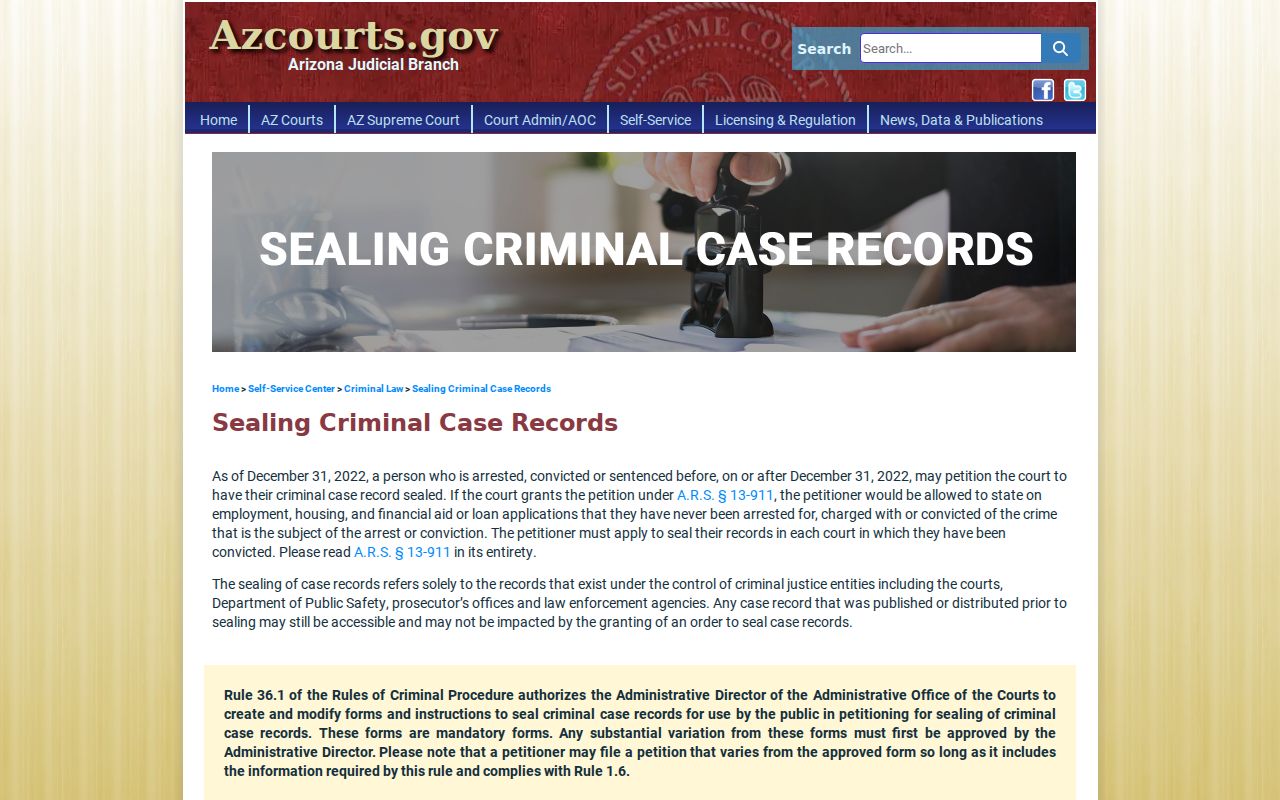
Qualifying paths vary. A completed conviction, a dismissed charge, a not-guilty finding, or an arrest without charge may each open a route. Statutory exclusions and waiting periods still apply. The official guidance on accessing sealed records describes the lawful access routes in the statute.
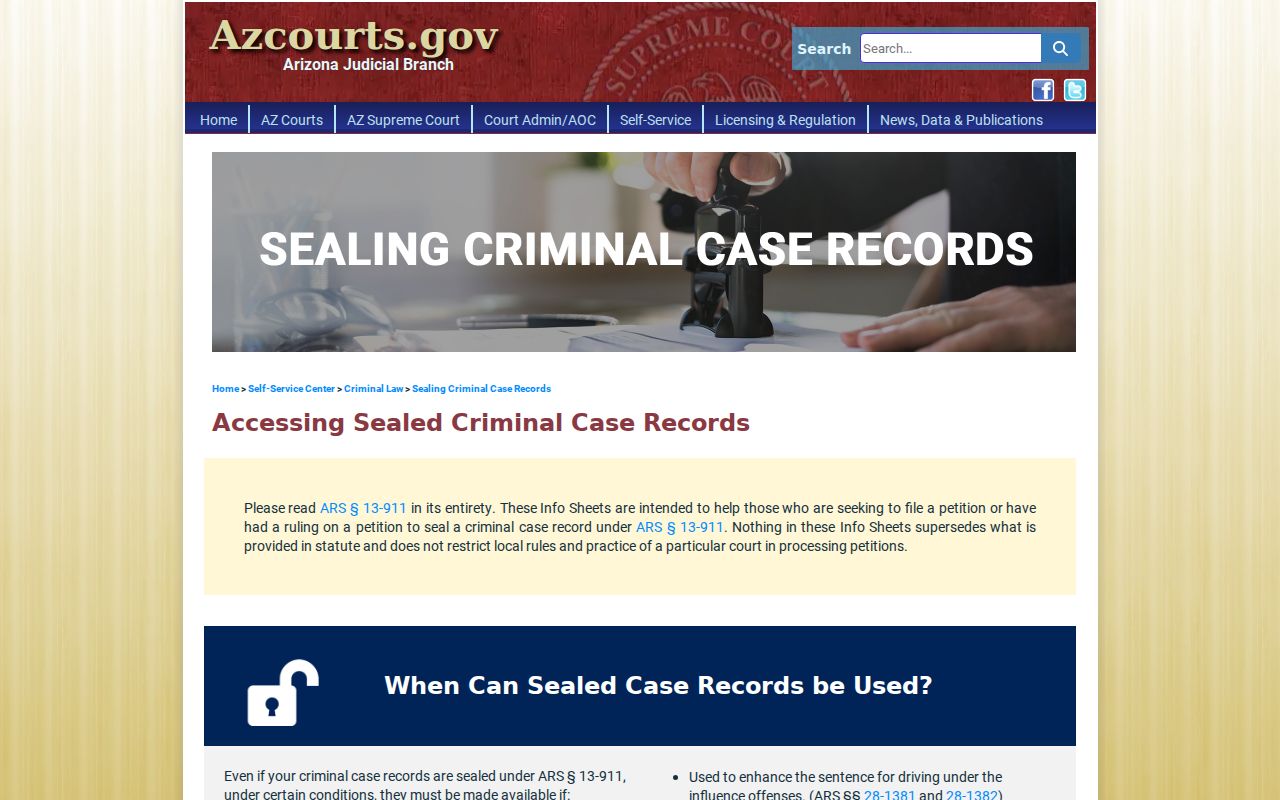
Anyone who needs a restricted item must go through the court's authorized process. Never try to slip past portal controls.